The Science of ADHD and Light
ADHD is a physical difference in how the brain sends and receives messages. These messages are carried by tiny parts of the brain called neurotransmitters.
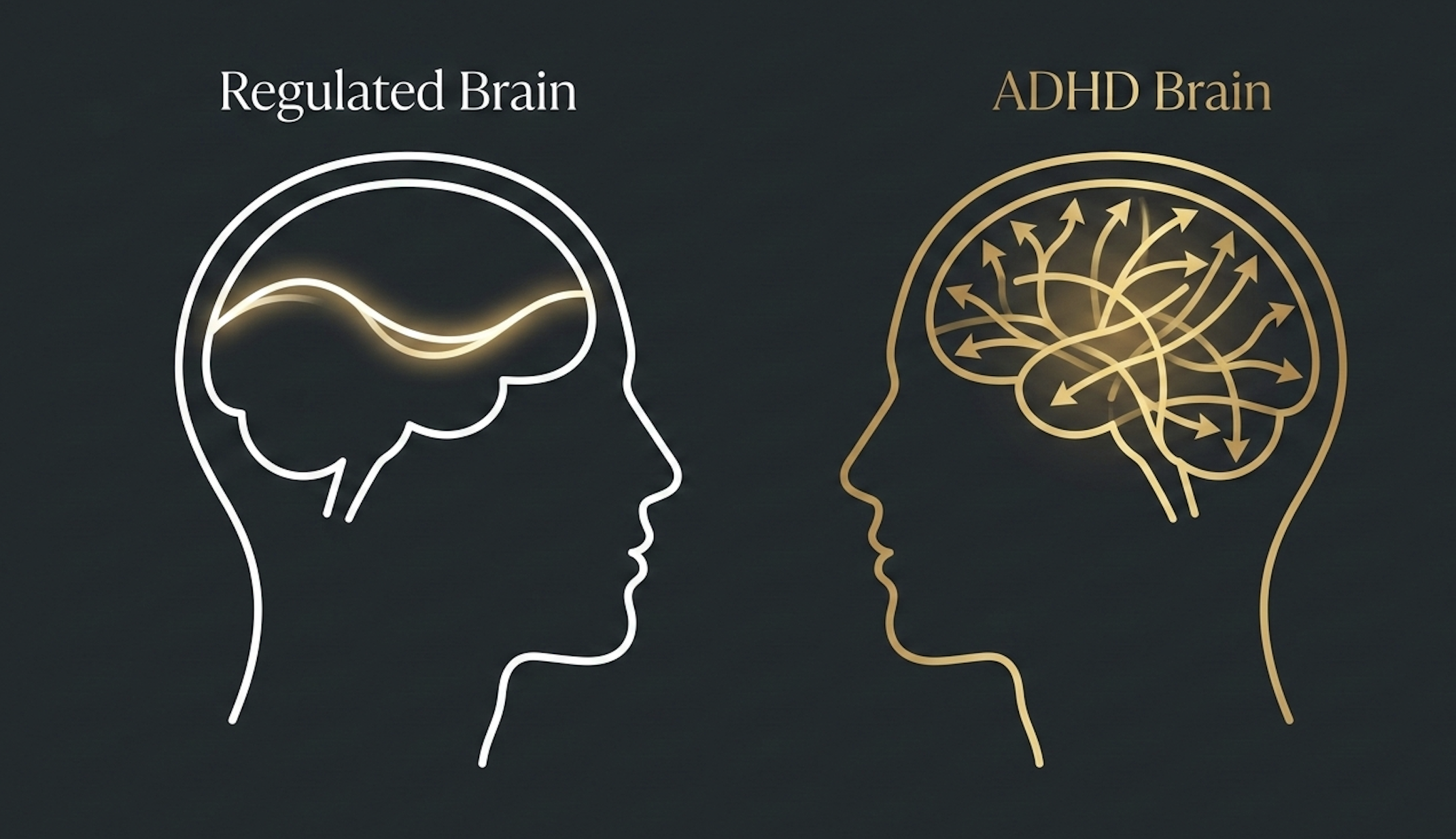
The One-Path Brain: In a typical brain, messages usually travel on one clear road. This makes it easy to stay on one task and ignore other things.
The Many-Path Brain: In an ADHD brain, many messages are moving at the exact same time. The brain is looking at a whole web of different sounds, thoughts, and ideas all at once.
Working Harder: Because the brain is handling so many messages at the same time, it is working much faster. This can make the inside of the mind feel very busy.
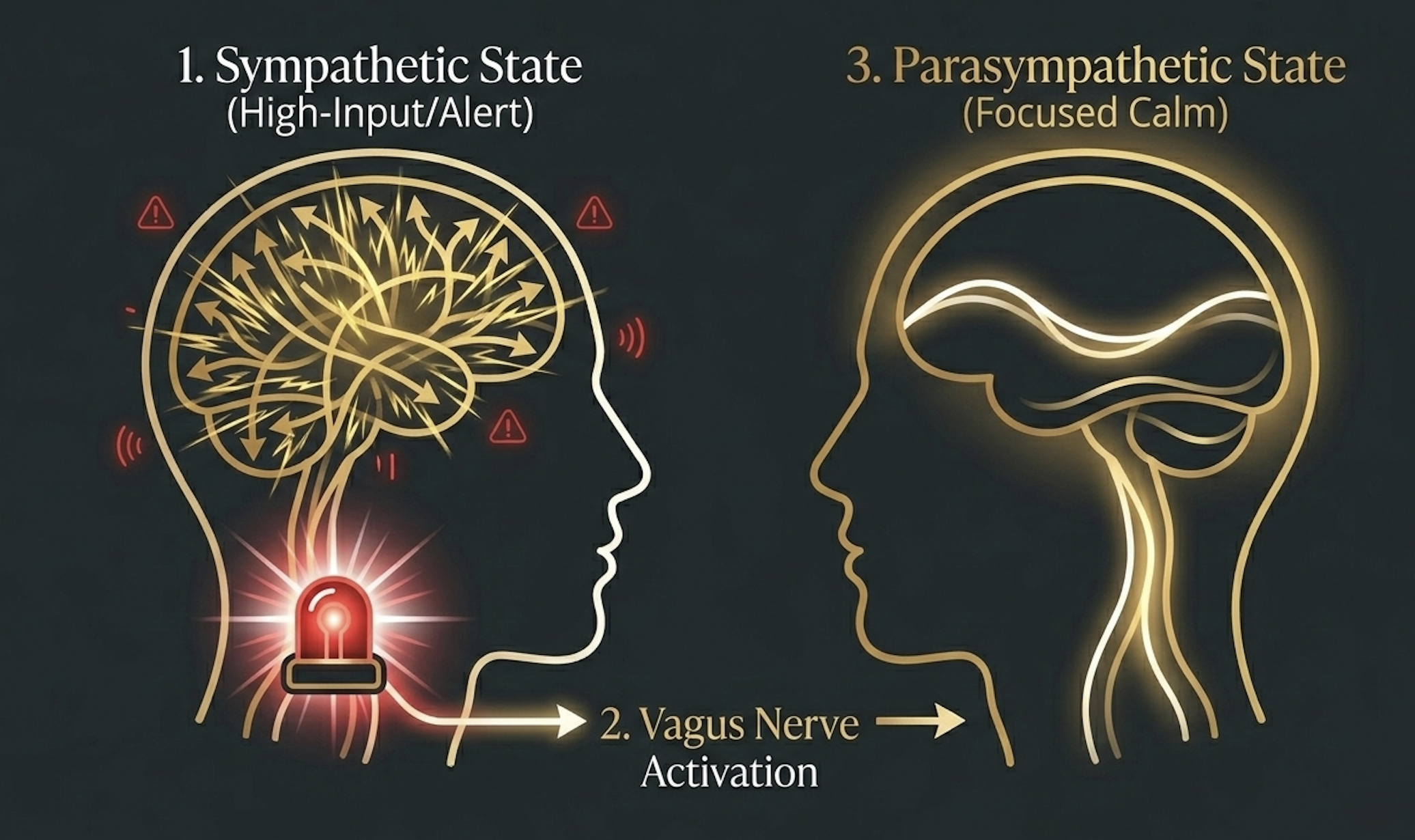
The brain has two main "modes" that control how you feel and react to the world. For an ADHD brain, the goal is to move from a state of high alert to a state of focused calm.
The High-Alert State: This is called the Sympathetic State. It is like a "fight or flight" mode. When the brain is here, it sees every signal as a potential emergency, making it feel loud, busy, and stressful.
The Focused Calm State: This is called the Parasympathetic State. This is the "rest and digest" mode. When the brain is here, the nervous system is calm, and it becomes much easier to focus and feel in control.
Making the Switch: Because the ADHD brain spends so much time in high-alert, it needs a physical "reset" to switch over to calm. This reset helps the nervous system slow down and find its natural flow.